Ans.
Concept of water potential (Ψw):-
- Osmotic movement of water takes place by a driving force which is the difference between free energies of water on two sides of the semi-permeable membrane.
- Free energy for per mole of non-electrolyte is known as chemical potential. It is denoted by greek letter Psi (Ψ).
- For water, chemical potential is known as water potential and denoted by Ψw. Free energy of water increases with increase in temperature.
Ψw = Ψs + ΨP + Ψm + Ψg
Ψw = Water potential
Ψs = Solute potential
ΨP = Pressure potential
Ψm = Metric potential
Ψg = Gravity potential
Note:- Ψs is always negative.
The total water potential is the sum of four different components:
Metric Potential (Ψm):- The binding of water to surfaces.
Osmotic Potential (Ψs):- Binding to solutes in the water.
Gravity potential (Ψg):- The position of water in a gravitational field.
Pressure potential (ΨP):- Hydrostatic or pneumatic pressure on the water.
But at the cell level Ψm and Ψg are insignificant. Hence –
Ψw = ΨP + Ψs
Ψw = Water potential
ΨP = Pressure potential
Ψs = Solute potential
- Water potential decreases with increase in concentration of solution.
- Water potential of pure water is zero which is maximum.
- In osmosis water moves from high Ψw to low Ψw solution.
Conditions:-
i. Fully plasmolysed cell or Fully flaccid cell:- ΨP = 0
Ψw = Ψs
ii. Fully turgid cell:- ΨP = Ψs
Ψw = 0
Osmotic Adjustment:- The process of lowering of osmotic potential by net solute accumulation in response to water stress, is called osmotic adjustment. It has been considered to be a beneficial drought tolerance mechanism in some crop species.

Ans.
Active Absorption (Active Uptake):-
Ø It has often been observed that the cell sap in plants accumulates large quantities of mineral salts ions
against the concentration gradient. It is an active process which involves the expenditure of metabolic energy through respiration.
Ø Following evidences favor this view:-
i. The factors like low temp., deficiency of O2, metabolic inhibitors etc. which inhibit metabolic activities like respiration in plants also inhibit accumulation of ions.
ii. Rate of respiration is increased when a plant is transferred from water to salt solution. It is called salt respiration.
a. The Carrier Concept:- According to this theory the plasma membrane is impermeable to free ions. But some compounds present in it acts as carrier and combines with ions to form carrier-ion-complex which can move across the membrane. On the inner surface of the membrane this complex breaks releasing ions into the cell while the carrier goes back to the outer surface to pick up fresh ions.

b. Cytochrome Pump Theory:-
Ø Lundegardh and Burstrom (1933) believed that there was a definite correlation between respiration and anion absorption. Thus when a plant is transferred from water to a salt solution the rate of respiration increases. This increase in rate of respiration over the normal respiration has been called as anion respiration or salt respiration.
Ø The inhibition of salt respiration and the accompanying absorption of anions by CO and cyanides (which are known inhibitors of cytochrome oxidase of electron transport chain in mitochondria), later on led Lundegardh (1950, 54) to propose cytochrome pump theory. This is based on the following assumptions:-
i. The mechanism of anion and cation absorption is different.
ii. Anions are absorbed through cytochrome chain by an active process.
iii. Cations are absorbed passively.
Ø According to this theory:-
i. ehydrogenase reactions on inner side of the membrane give rise to protons (H+) and electrons (e–).
ii. The electron travels over the cytochrome chain towards outside the membrane, so that the Fe of the cytochrome becomes reduced (Fe++) on the outer surface and oxidized (Fe+++) on the inner surface.
iii. On the outer surface, the reduced cytochrome is oxidized by oxygen releasing the electron (e–) and taking an anion (A–).
iv. The electron thus released unites with H+ and oxygen to form water.
v. The anion (A–) travels over the cytochrome chain towards inside.
vi. On the inner surface the oxidized cytochrome becomes reduced by taking an electron produced through the dehydrogenase reactions, and the anion (A–) is released.
vii. As a result of anion absorption, a cation (M+) moves passively from outside to inside to balance the anion.

Ø Main defects of the above theory are:-
i. It envisages active absorption of only anions.
ii. It does not explain selective uptake of ions.
iii. It has been found that cations also stimulate respiration.
c. Protein-Lecithin Theory:-
Ø In 1956, Bennet-Clark suggested that because the cell membranes chiefly consist of phospholipids and proteins and certain enzymes seem to be located on them, the carrier could be a protein associated with the phosphatide called as lecithin.
Ø He also assumed the presence of different phosphatides to correspond with the number of known competitive groups of cations and anions (which will be taken inside the cell).
Ø According to this theory:-
i. The phosphate group in the phosphatide is regarded as the active centre binding the cations, and the basic choline group as the anion binding center.
ii. The ions are liberated on the inner surface of the membrane by decomposition of the lecithin by the enzyme lecithinase.
iii. The regeneration of the carrier lecithin from phosphatidic acid and choline takes place in the presence of the enzymes choline acetylase and choline esterase and ATP. The ATP acts as a source of energy.
Pathways of Mineral Ions Movement:-
Once mineral salts reaches inside the epidermal cells of the root, their ionic form move from one cell to another by:-
i) Apoplastic pathway (i.e., through cell walls and intercellular spaces)
ii) Trans membrane pathway (i.e., by crossing the membranes)
iii) Symplastic pathway (i.e., through plasmodesmata)

Ultimately mineral salts reach to xylem vessels and tracheids, from where they are carried to different parts of the shoot along with ascent of sap.

Ans.
Reduction of Nitrates (Denitrification):-1. Denitrification:-
> Denitrification is the process during which the nitrogen compound is released back into the atmosphere by converting nitrate (NO3-) into gaseous nitrogen (N).
> The process of denitrification is carried out during the absence of oxygen by Thiobacillus species and Pseudomonas bacteria present in the soil. In this process, the genus of Gram-negative bacteria degrades nitrate compounds present in the soil and aquatic systems into nitrous oxide (N2O)and nitrogen gas, which are eventually released into the atmosphere.
> In this process, a large range of microorganisms is involved; therefore, it is also called the microbial process.
> This biogeochemical process is one of the main responses to changes in the oxygen (O2) concentration in the environment. Denitrification is a universal process for both terrestrial and aquatic ecosystems, which occurs naturally under the extreme concentrations in managed ecosystems – marine and freshwater environments, tropical and temperate soils, wastewater treatment plants, aquifers, manure stores, etc.
2. Mechanism of Denitrification:-
> Denitrification is the last step in the nitrogen cycle. It is a naturally occurring, microbially mediated process, where nitrate is used as a form of energy for denitrifiers.
> In this process, soil bacteria convert plant-available soil nitrate (NO3–) into nitrogen (N) gases that are lost from the soil. Denitrification produces several gases: nitric oxide (NO), nitrous oxide (N2O) and dinitrogen (N2).
> The flowchart of the denitrification process is:
Nitrite → Nitric Oxide → Nitrous oxide → Nitrogen gas
3. Sit of Denitrification:-
> Denitrification is a microbial process of removing valuable nitrogen from the soil and releasing the greenhouse gas nitrous oxide (N2O), and the tropospheric pollutant nitric oxide (NO).
> The biological cycle of denitrification involves a cascade of different enzymes, which reduces nitrate to dinitrogen.
4. Reason of Denitrification:-
> When the oxygen (O2) supply in the soil becomes limited, a variety of bacteria use the oxygen instead of nitrate for respiration. Denitrification most commonly occurs in wet, moist or the soil flooded with water where the supply of oxygen for respiration is reduced or limited. Some fungi can denitrify, but they are not considered significant.
5. Time of Denitrification:-
> Denitrification is more active in the regions where water-filled pore space in the soil exceeds 60 per cent. The end-product gas depends on the soil conditions and the microbial community. As the deficiency of oxygen increases, microbes perform their functions by converting more of the nitrate to dinitrogen (N2) gas. For the purposes of nutrient management, denitrification results in a loss of valuable nitrogen (N), but the impact on the atmosphere will vary.
6. Factors Affecting the Denitrification Process:- The complete process of denitrification is influenced by the following factors:
The main factor which influences the process of denitrification is the organic content in the soil. The organic matter available within the soil is the only source of nutrition for the bacteria. Therefore, the soil bacteria require a source of readily available organic matter, either from the plants, from the soil or from other additional sources.
Other factors include:-
i. Soil pH
ii. Soil texture
iii. Temperature
iv. Oxygen content in the soil
v. Moisture content in the soil
vi. The concentrate of nitrate in the soil

Ans.
Cytokinin:-
> It is mostly found in the roots of plants.
> Zeatin is the first natural cytokinin.
> Examples:-
i. Kinetin (6 – Furfuryl Amino Purine)
ii. Zeatin
iii. 2 – iP (2 – Iso Pentenyladenine)
iv. BA or BAP (Benzyl Adenine or 6 – Benzyl Amino Purine)
v. Adenine (Aminopurine)
1. Discovery of Cytokinins:-
- Skoog, Miller and co-workers in 1955 isolate and identify kinetin, a highly-active cell division factor, from autoclaved herring sperm DNA.
- In searching for naturally occurring cytokinins in plant tissues, Letham in 1963 isolated a cytokinin, zeatin, from immature corn kernels.
- A “kinetin-like” factor isolated by Miller in 1961 was later also identified as zeatin.
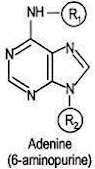
2. Chemical nature of Cytokinins:- All the naturally-occurring cytokinins are substituted purines. The usual way of naming a cytokinin is to express it as a substituted 6-amino purine or as N6-substituted adenine.

3. Biosynthesis of Cytokinins:-
> Cytokinin is synthesized in the roots from where they are transported to shoots by xylem tissues.
> Zeatin can be synthesized in two different pathways: the tRNA pathway and the AMP pathway.
> In the tRNA pathway zeatin is a recycled product of isopentenylated tRNAs.
> In the AMP pathway zeatin is synthesized from an isopentenyl donor, dimethylallyl diphosphate (DMAPP), and AMP, ADP, or ATP by isopentenyltransferases.
4. Bioassay of Cytokinins:-
a. Tobacco Pith Culture:- Out of two tobacco pith cultures, one is supplied with cytokinin while the other is not. Increase in fresh weight of the tissue over the control is a measure of stimulation of cell divisions and hence cytokinin activity. The test can measure cytokinin concentration between 0.001-10 mg/litre. It takes 3-5 weeks.
b. Retardation of Leaf Senescence:- It is a rapid bioassay technique. Leaf discs are taken in two lots. In one lot cytokinin is provided. After 48-72 hours, the leaf discs are compared for chlorophyll content. Cytokinin retards the process of chlorophyll degradation. The test is sensitive in concentration of 1 pg/litre.
c. Excised Radish Cotyledon Expansion:- The test was developed by Letham. Excised Radish cotyledons are measured and placed in test solution as well as ordinary water (as control). Enlargement of cotyledons is an indication of cytokinin activity.
i. Cell Division:- Cytokinins are essential for cytokinesis though chromosome doubling can occur in their absence. In the presence of auxin, cytokinins bring about division even in permanent cells. Cell division in callus is found to require both the hormones.
ii. Morphogenesis:- Both auxin and cytokinins are essential for morphogenesis or differentiation of tissues and organs. Buds develop when cytokinins are in excess while roots are formed when their ratios are reversed.
iii. Differentiation:- Cytokinins induce formation of new leaves, chloroplasts in leaves, lateral shoot formation and adventitious shoot formation. They also bring about lignification and differentiation of inter-fascicular cambium.
iv. Senescence (Richmond-Lang Effect):- Cytokinins delay the senescence of leaves and other organs by mobilisation of nutrients.
v. Apical Dominance:- Presence of cytokinin in an area causes preferential movement of nutrients towards it. When applied to lateral buds, they help in their growth despite the presence of apical bud. They thus act antagonistically to auxin which promotes apical dominance.
vi. Seed Dormancy:- Like gibberellins, they overcome seed dormancy of various types, including red light requirement of Lettuce and Tobacco seeds.
vii. Resistance:- Cytokinins increase resistance to high or low temperature and disease.
viii. Phloem Transport:- They help in phloem transport.
ix. Accumulation of Salts:- Cytokinins induce accumulation of salts inside the cells.
x. Flowering:- Cytokinins can replace photoperiodic requirement of flowering in certain cases.
xi. Sex Expression:- Like auxins and ethylene, cytokinins promote femaleness in flowers.
xii. Parthenocarpy:- Crane (1965) has reported induction of parthenocarpy through cytokinin treatment.
xiii. Stomatal opening:- It has been shown that an increased cytokinin concentration in xylem sap promotes stomatal opening.
6. Applications of Cytokinins:-
i. Tissue Culture:- Cytokinins are essential for tissue culture because besides cell division they are also involved in morphogenesis. Instead of direct addition of cytokinins, the latter may be provided to tissue culture through the addition of coconut milk or yeast extract.
ii. Shelf Life:- Application of cytokinins to marketed vegetables can keep them fresh for several days. Shelf life of cut shoots and flowers is prolonged by employing the hormones.
iii. Resistance:- Cytokinin application is helpful to plants in developing resistance to pathogens and extremes of temperature.
iv. Overcoming Senescence:- Cytokinins delay senescence of intact plant parts.
7. Mode of Action of Cytokinins:-
> Cytokinin moves from the roots into the shoots, eventually signaling lateral bud growth.
> Simple experiments support this theory.
> When the apical bud is removed, the axillary buds are uninhibited, lateral growth increases, and plants become bushier.
> Applying auxin to the cut stem again inhibits lateral dominance.

Ans.
Biosynthesis of Ethylene:- Ethylene is known to be synthesized in plant tissues from the amino acid methionine. A non-protein amino acid, 1-amino cyclopropane-l-carboxylic acid (ACC) is an important intermediate and also immediate precursor of ethylene biosynthesis. The two carbons of ethylene molecule are derived from carbon no. 3 and 4 of methionine.
a. First Step:- In the first step, an adenosine group (i.e., adenine + ribose) is transferred to methionine by ATP to form S-adenosylmethionine (SAM). This reaction is catalysed by the enzyme SAM-synthetase (methionine adenosyl transferase).
b. Second Step:- In the second step, SAM is cleaved to form 1-aminocyclopropane-l- carboxylic acid (ACC) and 5′-methylthioadenosine (MTA) by the enzyme ACC-synthase.
i. Synthesis of ACC is rate limiting step in ethylene biosynthesis in plant tissues.
ii. Exogenously supplied ACC greatly enhances production of ethylene in plant tissues.
c. Third Step:- In the third and last step of ethylene biosynthesis, ACC is oxidised by the enzyme ACC-oxidase (previously called ethylene forming enzyme i.e., EFE) to form ethylene. Two molecules, one each of HCN and H2O are eliminated.
i. ACC oxidase activity can be rate limiting step in ethylene biosynthesis in plant tissues which show high rate of ethylene production such as ripening fruit.
ii. The enzyme ACC oxidase requires ferrous iron (Fe2+) and ascorbate as cofactors.
iii. ACC can be conjugated to give N-malonyl ACC and thus, may play an important role is regulation of ethylene biosynthesis.
Yang Cycle:-
- There is only limited amount of free methionine (which is a sulphur containing amino acid) in plant tissues. Therefore, to sustain normal rate of ethylene biosynthesis, the sulphur released during ethylene biosynthesis is recycled to methionine again through methionine cycle or Yang cycle (so named after the pioneer worker S.F. Yang on ethylene biosynthesis).
- The CH3-S group is salvaged and reappear in methionine as a unit. The remaining 4C atoms of methionine are supplied from ribose moiety of ATP which was originally used to form SAM. A transamination reaction provides the amino group.
Physiological effects of Ethylene:-
i. Fruit Ripening:- Its main function is to ripen fruits. The most commonly used chemical is called ethephon (2-chloro ethylphosphonic acid). It penetrates into the fruit and decomposes ethylene.
ii. Triple Response:- Ethylene causes plants to have –
i. Short shoots:- Inhibition of stem elongation.
ii. Fat shoots:- Stimulation of radial swelling of stems.
iii. Diageotropism:- Increased lateral root growth and horizontal growth of stems with respect to gravity.
iii. Formation of Adventitious Roots and Root Hairs:- Ethylene induces formation of adventitious roots in plants from different plant parts such as leaf, stem, peduncle and even other roots. In many plants especially Arabidopsis, ethylene treatment promotes initiation of root hairs.
iv. Inhibition of Root Growth:- Ethylene is known to inhibit linear growth of roots of dicotyledonous plants.
v. Leaf Epinasty:- When upper side (adaxial side) of the petiole of the leaf grows faster than the lower side (abaxial side), the leaf curves downward. This is called as epinasty. Ethylene causes leaf epinasty in tomato and other dicot plants such as potato, pea and sunflower. Young leaves are more sensitive than the older leaves. However, monocots do not exhibit this response.
vi. Flowering:- Ethylene is known to inhibit flowering in plants.
vii. Sex Expression:- In monoecious species especially some cucurbits like cucumber, pumpkin, squash and melon; ethylene strongly promotes formation of female flowers thereby suppressing the number of male flowers considerably.
viii. Senescence:- Ethylene enhances senescence of leaves and flowers in plants. In senescence, concentration of endogenous ethylene increases with decrease in conc. of cytokinins and it is now generally held that a balance between these two phytohormones controls senescence.
ix. Abscission of Leaves:- Ethylene promotes abscission of leaves in plants. Older leaves are more sensitive than the younger ones.
x. Breaking Dormancy of Seeds and Buds:- Ethylene is known to break dormancy and initiate germination of seeds in barley and other cereals. Seed dormancy is also overcome in strawberry, apple and other plants by treatment with ethylene. Non-dormant varieties of seeds produce more ethylene than those of dormant varieties.

Ans.
Vernalization:- It is the artificial exposure of plants or seeds to low temperatures in order to stimulate flowering or to enhance seed production. Gibberellin is a hormone that replaces vernalization. The metabolically active apical meristems are the sites of perception of temperature to initiate flowering. The younger leaves are more susceptible to the process of vernalization. The shoot apex of mature stems or embryo of seeds receives low temperature stimulus.
Mechanism of Vernalization:- Through vernalization, there is an advancement in the process of blooming as a result of the delayed period of low temperatures, for instance, that which is attained in winter. To describe the mechanism of vernalization, there are two main hypotheses –
a. Phasic development theory
b. Hormonal theories
a. Phasic Development Theory:- As per this hypothesis, there is organization of stages in the plant’s improvement. Each stage is under the impact of environmental elements such as light, temperature etc. Here, in turn, there are two main stages –
i.Thermostage:- It depends on temperature, wherein vernalization accelerates thermostat. Thermostage is the vegetative phase requiring low heat, aeration and enough dampness
ii. Photostage:- It necessitates high temperature. Here, vernalin assists in producing florigen.
b. Hormonal theories:- As per this hypothesis, the freezing treatment propels the development of a floral hormone referred to as vernalin. Such a hormone is imparted to various parts of the plant. The vernalin hormone diffuses from the vernalized plants to the unvernalized plants, prompting blooming.


.png)


.png)
.png)


